Monday, 29 November 2010

Essay Targets

Targets:
1. Remember the focus on this section is the British Film Industy, you must use british examples.
2. Examples must be used from your case study. Working Title, WARP and Hollywood should be used as comparisons.
3. Always refer back to the question, in this case the impact on the film industry.
4. Institutions and audience is your main focus within any given question. You must discuss these two areas in which you have studied.
5. Use the term audience as a substitute for "people" and "you/us", unless you are giving your opinion.
6. Technology is key, so make use of the terms you know: audience, conglomerate, process etc.
7. Give detailed points and explain, not describe . Remember PEE (Point Evidence and Explain)


For when i do my next essay, i will use these 7 points to help me plan my question. Also when writing my essay, i must not over write on a small section e.g (3D) and must refer back to the question.

Thursday, 25 November 2010

Spooks


How is the representation of ethnicity constructed in this clip?

At the start of the clip we see that Adam is on the phone to the woman, while in the background the terrorist is ordering him to choose a person's life in this conversation. The woman says that she loves Adam over the phone, this could be the reason for the actions that take place from Danny. In the scene of Danny speaking, the room is darkly lit, with soothing/tense music playing in the background.

In the room there are 2 hostages (Danny and the Woman), a man in all black with a balaclava and a gun, guarding the door. The terrorist, who is in charge of the whole operation, looks Arabic with a smart suit on.

When the attention is focused on Danny, we get a close up on his face, with half of his face lit and the other side dark. Danny and the woman in this scene are both dressed well, with the woman in a suit and Danny in a shirt, but unbuttoned. Before speaking out, Danny mutters to himself before speaking aloud, this could indicate that he is praying to himself. He does this twice throughout the clip.

Unfinished.

Black and White

Race (ethnicity)

Stereotypes of white people in the media:
  • More upper-class compared to blacks.
  • Women are usually given the "perfect" look.
  • Law Abiding.
  • Blonde/Big Boobs.
  • Drink alcohol - Wine/Beer.
  • Stressed/Worried.
  • Talk about the weather 24/7.
  • Trailer trash (Eminem)
  • Educated.
  • Academic.
  • Nerdy.
  • Uptight.
  • Stiff (Upper-lip).
  • Size zero
  • Bitchy
  • Can't run fast
  • Sarcastic/Sense of humour.
Stereotypes of black people in the media:
  • Ghetto booty.
  • Criminals.
  • Rhythmic.
  • Poor.
  • Gangsta.
  • Not usually shown on T.V. (Weather/ News reporter)
  • Can't Swim.
  • Well hung.
  • Black characters always die in films.
  • Rappers.
  • Cooler than white people.
  • More muscular.
  • Big lips.
  • Big nose.
  • Speak slang.
  • Black men make crap fathers.
  • P.I.M.P.S
  • Single parent families.
  • Religious - Gospel.
  • Big families in small houses.
  • Unusual names for black women.

Monday, 22 November 2010

Audience Questions


Task 1.

1. Do you think the audiences for most media texts do come “from all walks of life” or do different kinds of people watch very different kinds of programme? Are there any examples of media texts that you can think of that do seem to have audiences of all kinds of people?

I think that different programmes appeal to different people. For example CBBC programmes would appeal to children, and not adults. Teenagers would be more appealed to watch skins/the inbetweeners for the inappropriate behaviour and that it is a teenage programme, whereas the older generation would me more appealed to period dramas.

2. How much of your media experience occurs when you are on your own and how much when you are with others?

When with friends, I tend to share my media experiences with them, for example going cinema with them, watching T.V. and playing games. When on my own, I tend to watch most television on my own unless it’s a film I will go and watch it with my family. I also read books and magazines by myself.

3. Are there any ways in which you share your experiences of the media with other people who weren’t around when you experienced the text? List as many ways as you share experiences (e.g. msn etc.)

People text and talk over Facebook 24/7, this causes more and more friends to speak to each other/spread the word around instead of not being face to face. Some people use msn but social networks have made them the past.

Task 2

1.Can you think of any examples where the media have been seen to influence public behaviour or have been blamed for an individual’s behaviour?

Mainstream rappers in the media (50 cent, Eminem, T.I) use a lot of obscenities and talking about guns / drugs in their lyrics, also containing political challenging lyrics. This is a bad influence to the listener as they may inspire to these lyrics and can become aggressive when listening to this sort of music. Also the E4 series ‘Skins’, which displays graphic use of drugs, sex and smoking of underage teenagers can inspire young teenagers to do the exact thing because “they have seen it on TV” or “to make them look cool”.

2.Is this influence always negative?

No, not all these are negative, for example there are rappers out there who do not use offensive language to sell music. But music which you can listen and inspire to.

Thursday, 18 November 2010

Let The Right One In


Film: Let the Right One In
Director: Tomas Alfredson
Released: 2008
Swedish film with English subtitles.

Characters:

Oskar – Oskar is a 12 year old boy, who has pale skin, blonde hair and blue eyes. Throughout the film we find that Oskar is clumsy, lonely, disturbed, his parents have split up and that he is being bullied by three boys at school. When going out to play, Oskar tends to carry a knife around with him (to make him feel safe) and –rein act’ what the bullies do to him. Oskar’s interests are, reading about murders and crimes and weightlifting after school.

Eli – Eli is also 12 years old, she lives in the apartment next to him (recently moved in) and when first meeting Oskar, she claims that they both cannot be friends. When being with Oskar, Oskar says that she smells and asks why she is not cold (she replies with “I don’t feel it anymore”). Later on in the film with the first murder, we see that Eli is a vampire and can only live off blood. To back the theory up off Eli can only have blood, Oskar offered her a sweet, and after trying it we see that Eli is being sick because of it.

Oskar’s mother – Oskar’s mother is very protective over Oskar, but allows him to play in the court outside and allows him to explore on his own. She is just a housewife and has no major role in the film.

Eli’s ‘father’ – Eli’s so called father is also Eli’s carer. It’s his job to go and murder victims for their blood, by this he kills them in anyway and then hangs them upside down, slits there throat and allows the blood to pour into his container. The character is very mysterious, odd, quite and tries to keep a low profile (does not socialise, keep’s himself to himself). You can see he care’s a lot for Eli.

The film’s general setting is in the Swedish winter, so there is always snow everywhere. Because it is winter in Sweden, this means that a large part of the film is shot in the dark and dull lighting. In the day, the lighting is very bright because of the sun reflecting off the snow and the clear sky. The music that is used during emotional moments and transitions is normally soothing/string music, and usually changes according to the time of day (day = nice and chilled, night = dark) and when it gets intense. Most of the colours in the mise en scene of the film are usually neutral. This is common in horror films as it creates a dull atmosphere, making it more “creepy” and “eerie” for key moments in the film. From the characters appearances and the clothing, I can come to the conclusion that the film is set in the 1980’s, and the locations all seem old.

Binary opposites:

Rich and poor: Oskar’s apartment is a normal living area, but nothing too classy and filled with person belongings giving it that warm home setting. Eli’s apartment is bare with literally nothing in it except for a kitchen, bathroom and somewhere for her to sleep. But, she does have a lot of money and has a Carl Faberge egg, which is worth millions.

Old and young: Oskar is 12 and Eli is also 12, but has looked that age for ages. As her condition will not let her grow.

Good and Evil: Oskar is an innocent and shy boy who wouldn’t harm anyone, and Eli has committed murders.

Equilibrium: Oskar lives happily with his mother in a small town in Sweden and visits his father from time to time.

Disruption: Murders are starting to take place in nearby towns. Eli then moves in next door to Oskar in his apartment. After a while of meeting up with each other, Eli and Oskar become friends, Oskar then tells Eli about him being bullied so Eli tells him to stick up for himself (Later on he hits the main bully with a metal pole to his face, the bullying then stops) and later on, because Eli is his only friend and unaware that she is a vampire, he cuts his hand with a knife (showing that he wants to do blood brothers). Eli turns evil and starts to lick up his blood on the floor while gnarling, she warns Oskar to go but Oskar is in shock. So Eli was able to restrain herself and run off.

Tuesday, 9 November 2010

Technology


Computer Generated Imagery

What is it?
• Computer Generated Imagery
• 3D Computer Graphics
• Special Effects
• First used in 1973 (WestWorld – Sci-Fi movie)

How is it used?
• Technological Movies
• In Computer Games
• To Create other-worldly experiences
• Simulators, to represent the outside world (Flight/Rollercoaster Simulator)

Impact it has:
• It Makes it possible to allow certain stunts and scenes to become real (e.g. Twilight, Die Hard)
• Without CGI, a lot of great movies would not exist (Star Wars, Avatar)

3D

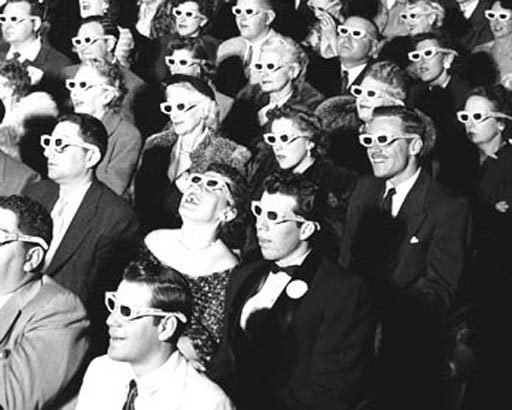
• You can now see films in 3 dimensions (filmed with 3 lenses) to make the viewer feel more involved.
• You have to wear the 3D glasses to bring all three different camera angles into focus so that it appears to be in 3 dimensions.
• There are some disadvantages because the glasses are uncomfortable and a lot of 3D is of a poor quality as it’s not actually filmed in 3D.
• Examples of 3D Films are: Avatar, Spy Kids 3D and Cars 2.
• 3D is now available on Sky T.V. (Only for SKY customers with a 3D T.V.)

Editing Software

• All Films require editing, the BBC use “Avid” software.
• It makes footage smoother, you can add credits titles etc.
• Non-linear editing (editing that is put together from different parts of the movie, not all in sequence)

High-Definition

• IMAX cinema’s show HD films.
• Has better Imagery (1million pixels)
• IMAX screen is 22 meters wide by 16 meters high, this is equivalent to a five storey building, and as wide as 4 busses.
• HD Is now available for T.V. as well as Cinemas.

Cameras

• 35mm films changed to digital in 1999
• The new Sony a55 has changed the dSLR market. It’s like a traditional dSLR, with interchangeable lenses and phase-detection AF, but with the simpler and lighter design of the compacts.
• Less blurring with modern technology.
• 35mm 24 frames per second, digital does 48 frames per second.

Thursday, 28 October 2010

The Male Gaze - Music Video


  • N.E.R.D's music video for the song Lapdance, fits in well with Laura Mulveys theory of the 'Male Gaze'. Mulvey theory suggests that:

    "visual pleasure and narrative cinema"

    Active males/passive female.

    Woman as image/men as "bearer of the look.

    Voyeuristic

    fetishistic

    N.E.R.D'S music video contains most of these points, it shows many images of women wearing minimal clothing, acting as the 'image'. Throughout the video there are also many clips of the men looking at and admiring the women, this shows them acting as the 'bearer of the look'. Women are treated as objects in this video, they wear little clothing and are there to catch the attention and 'gaze' of the audience. The video is very sexual and seductive towards males, it shows several scenes of women surrounding the male singers trying to seduce them. This also ties in with Majorie Ferguson catorgaries of female expression, the women use romantic and sexual looks and actions to gain attention and hold the 'gaze' of the audience.

The Male Gaze


Marjorie Ferguson (1980) identified four types of facial expression in the cover photos of British women’s magazines:


Chocolate Box: half or full-smile, lips together or slightly parted, teeth barely visible, full or three-quarter face to camera. Projected mood: blandly pleasing, warm bath warmth, where uniformity of features in their smooth perfection is devoid of uniqueness or of individuality.

Invitational: emphasis on the eyes, mouth shut or with only a hint of a smile, head to one side or looking back to camera. Projected mood: suggestive of mischief or mystery, the hint of contact potential rather than sexual promise, the cover equivalent of advertising’s soft sell.

Super-smiler: full face, wide open toothy smile, head thrust forward or chin thrown back, hair often wind-blown. Projected mood: aggressive, ‘look-at-me’ demanding, the hard sell, ‘big come-on’ approach.

Romantic or Sexual: a fourth and more general classification devised to include male and female ‘two-somes’; or the dreamy, heavy-lidded, unsmiling big-heads, or the overtly sensual or sexual. Projected moods: possible ‘available’ and definitely ‘available’.

Trevor Millum offers these categories of female expressions:

1. Seductive: similar to the cool/level look in many respects - the eyes are less wide, perhaps shaded, the expression is less reserved but still self-sufficient and confident; milder versions may include a slight smile.

2. Seductive: similar to the cool/level look in many respects - the eyes are less wide, perhaps shaded, the expression is less reserved but still self-sufficient and confident; milder versions may include a slight smile.

3. Practical: concentrating, engaged on the business in hand, mouth closed, eyes object-directed, sometimes a slight frown; hair often short or tied back.

4. Comic: deliberately ridiculous, exaggerated, acting the fool, pulling faces for the benefit of a real or imaginary audience, sometimes close to a sort of archness.

5. Catalogue: a neutral look as of a dummy, artificial, waxlike; features may be in any position, but most likely to be with eyes open wide and a smile, but the look remains vacant and empty; personality has been removed. (Millum 1975, 97-8)

How are regional identity and sexuality represented in the opening sequence of Shameless episode 1?


In class we had a group discussion about the different stereotypes that are associated with a sexual and regional identity, here is what we came up with.

Sexuality:

Straight: Love boobs, drink beer, metrosexual, unhealthy, insensitive, do manly things (sports etc)

Gay: limp wristed, mincing walk, flamboyant, gay couple (one is female, other is male) and mostly muscular.

Regional Identity:

Northerners: butch, strong accents, tracksuits, poor, uneducated, drink heavily, chips/pie gravy, crime rates are high and old fashioned.

Southerners: Rich, business men / suits, posh, expensive lifestyle and the glamour’s part of England.

The characters and scenes in episode 1.

Lip: Lip is a straight, normal teenage boy with sexual urges. In the opening scene, we find him going to a girl’s house to help her out in physics homework. Because he charges and she has no money, Lip has his first sexual encounter. This scene is very odd as the girl’s mother is in the kitchen next to them where she could see everything, but was too busy cooking and watching the TV. After this encounter, Lip gets back to his house and try’s to hide his underwear, when hiding the underwear he discovers his brothers (Ian) gay porn stash. Later on in the scene Lip brags to his brother about his sexual encounter, then asks his brother if he has had any (even though he knows he’s gay) and then confronts Ian about his gay porn.

Ian: Ian is gay and sensitive, when confronted about his gay porn he runs to his bed and starts to cry. He tries to cover the fact he’s gay by blending in with his family and friends, trying to look ‘normal’ or ‘not gay’, he pulls this off by acting hard and wearing tracksuits like anyone else (doesn’t look gay). He also has a picture of Kylie in his room.

Friday, 22 October 2010

Preliminary Magazine Cover and Contents


Representation - The Man

When first shown this image, i had to describe the man and what i thought of him based on the picture. My thoughts off him are that he is homeless, scruffy, not had a shave, clothes have been well worn (patched up) and could be a squatter. He doesn't look like a man to have family or kids either. Also the fact that he is standing in the middle of a busy street in a city gives me the impression that he has nowhere to go or anything to do.

However his clothes are clean, so he may not be homeless, but living in a local hostel? he is also smoking, if he was homeless he would be using that money for food.

After describing the man, i was shown another picture of him, and was told that he is Doug Bilmaier, head of the vintage department for Ralph Lauren. It shows me that i sterotyped him for being different in the style of clothes that he was wearing, when all he was doing was having a cigarette break on the street.


Media Interests


Films: Green Street, Toy Story 3, Bad Boys II and The Hurt Locker.

T.V: Big Brother, Shameless, Family Guy, The Inbetweeners, Skins and Road Wars.

Radio: BBC 1 Xtra and Rinse FM.

Newspapers/Magazine: FourFourTwo.

Games: Fifa 11, Gears of War 2 and Skate 3.